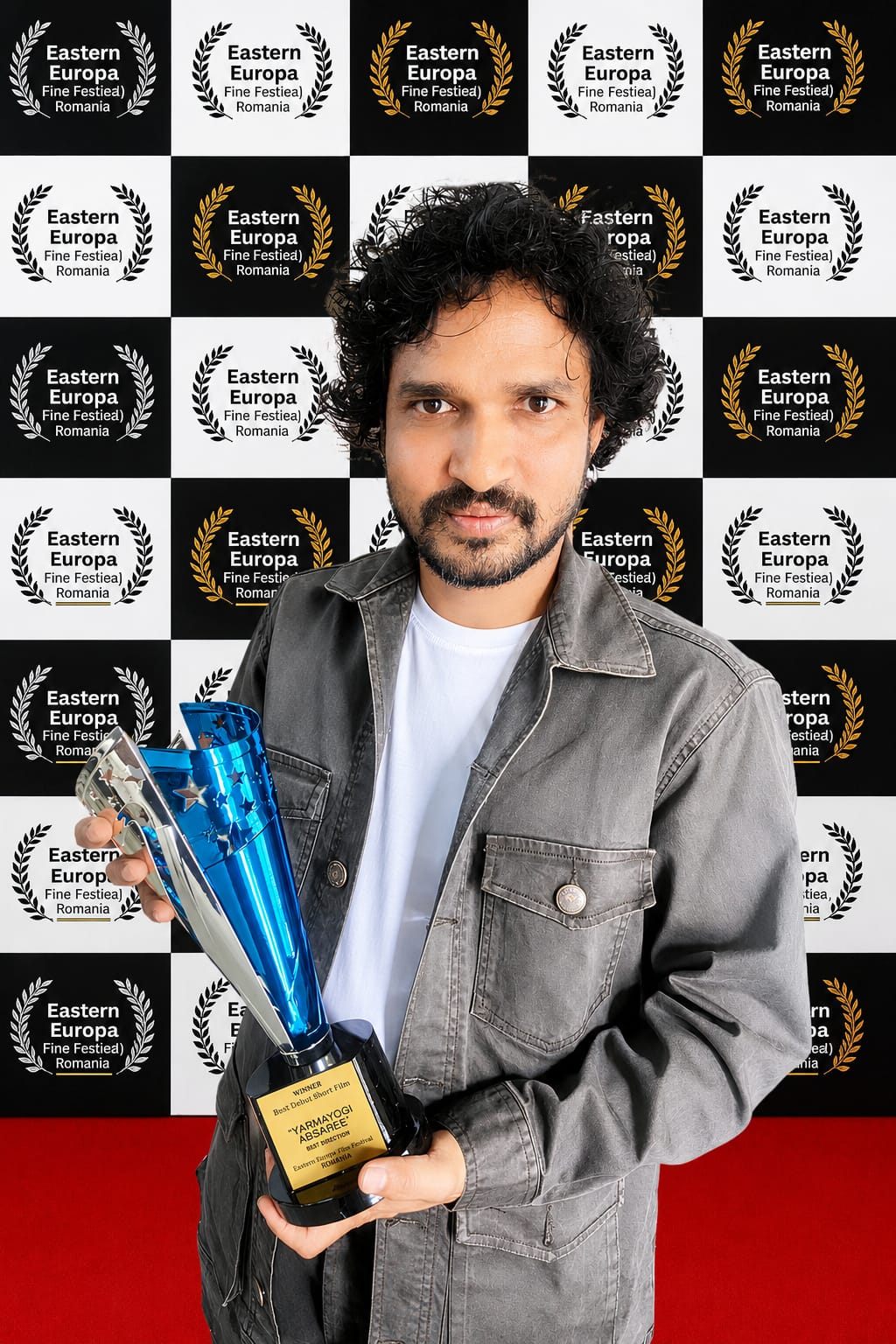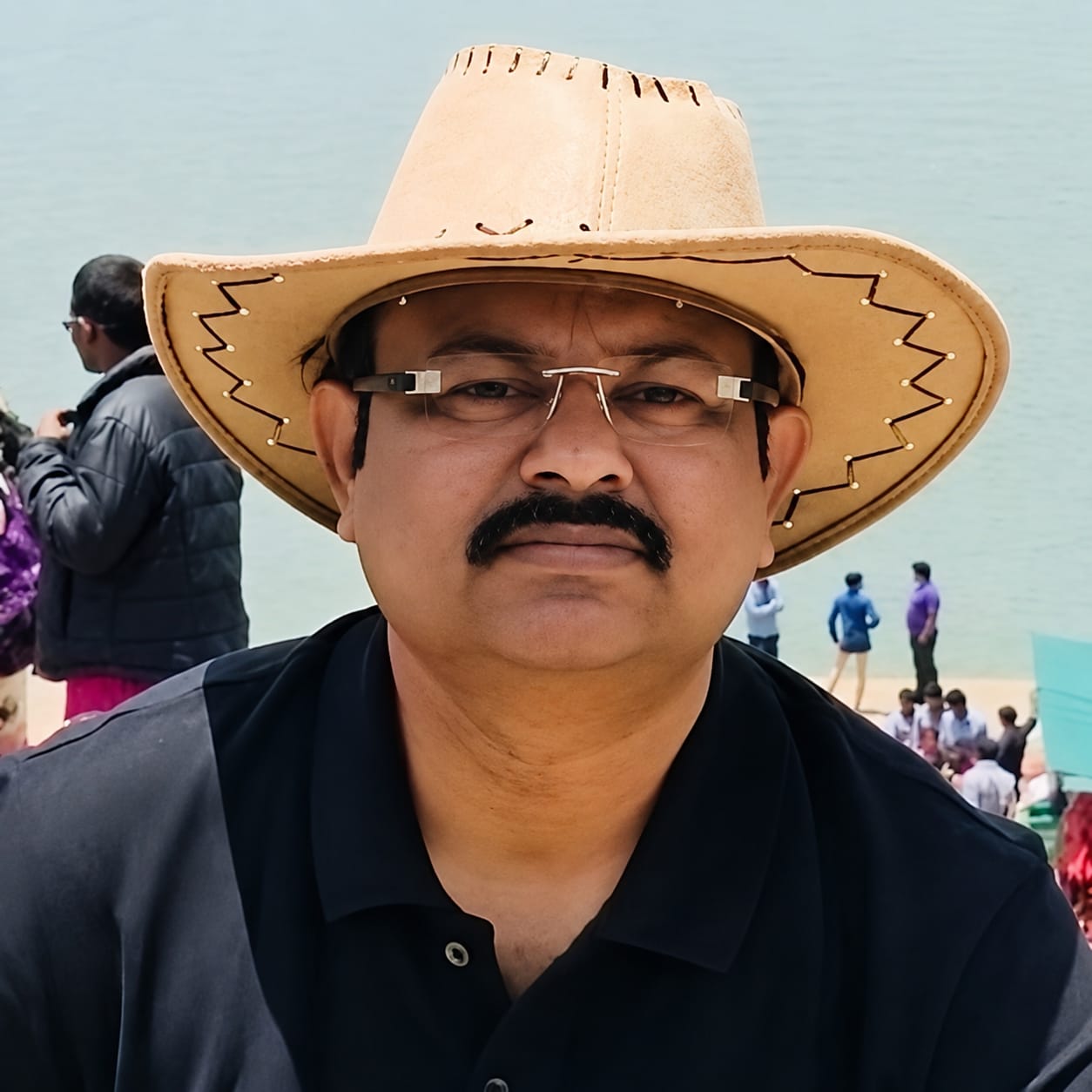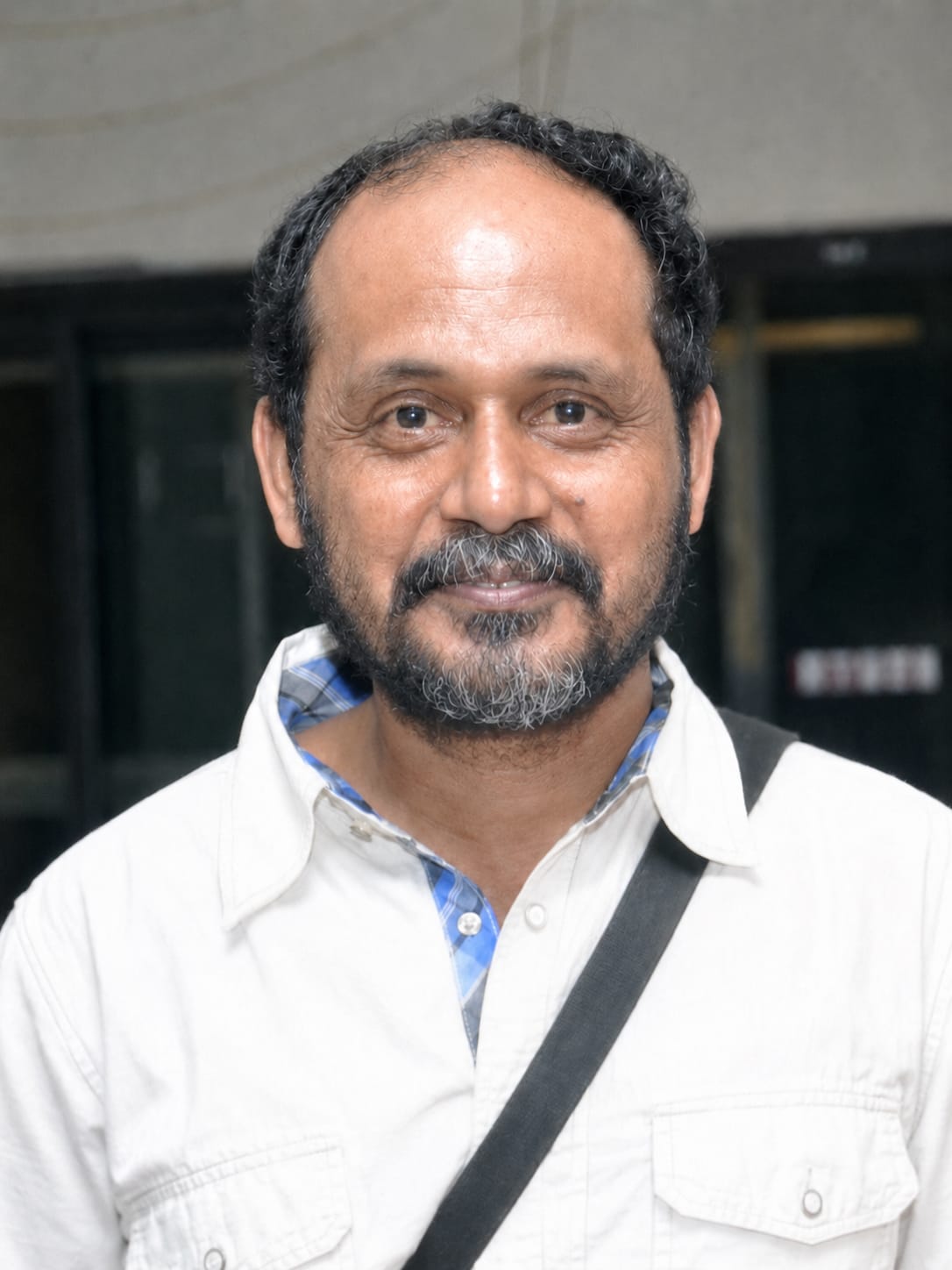
Dipak Mandal: The Invisible Architect of the Moving Image
Indian Film Editor, Post-Production Professional and Mentor
Some of cinema’s most decisive creative choices are made far away from the set. After the actors have performed, the camera has stopped rolling and the director has accumulated hours of footage, another kind of filmmaking begins. Images must be selected, performances shaped, pauses measured, scenes reordered, transitions discovered and the emotional rhythm of an entire film constructed. The audience may never see the person responsible for these decisions, yet it experiences that person’s judgement in virtually every minute of the finished work.
Dipak Mandal belongs to this largely invisible but indispensable tradition of filmmaking.
A Kolkata-based Indian film editor and post-production professional, Mandal has built a career extending across Bengali and other Indian-language cinema, documentaries, television productions, advertising films and institutional projects. His professional record connects him with filmmakers including Bappaditya Bandopadhyay, Satarupa Sanyal, Hiren Bora, Somnath Sen, Paromita Munshi and numerous independent and regional filmmakers. His work has travelled beyond commercial theatres to national and international film-festival platforms, while his career has also extended into post-production supervision and film education.
An archived biographical profile describes him as a film editor based in Kolkata who has edited films in several languages, including Bengali, Assamese, Hindi and English. It specifically associates him with such films as Onyo Opalaa, Sohra Bridge, Elar Char Adhyay, Nayika Sangbad and Houseful. His later professional résumé presents an even broader body of work, stating that he has edited more than 100 feature films in addition to the selected titles listed there, as well as more than 40 documentaries.
The difference between those figures is best understood chronologically: the archived WikiMili material reflects an earlier stage of his career, while the supplied professional résumé records a substantially expanded later filmography.
What emerges from these records is not merely a list of credits. It is the portrait of an editor whose career has unfolded across languages, formats, technologies and generations of Indian filmmaking.
Early Life and Education
Dipak Mandal was born on 5 February 1972 in West Bengal. His archived biographical profile places his origins near Raiganj in Uttar Dinajpur district.
His academic journey did not begin exclusively within cinema. His professional résumé records a B.Sc. (Honours) from North Bengal University, followed by an M.A. in Film Studies from Jadavpur University. The archived biography further states that he studied in Jadavpur University's Department of Film Studies and graduated in 1998.
That combination of science and film studies is an interesting foundation for an editor. Film editing requires artistic intuition, but it is also an unusually structural discipline. An editor must understand duration, continuity, causality, visual information and the relationship between small technical decisions and a larger emotional result. Mandal's education therefore preceded a profession in which analytical discipline and creative judgement constantly intersect.
Jadavpur University is particularly significant in this story. Film Studies provided Mandal with an intellectual engagement with cinema before editing became his sustained professional practice. His training was further supplemented by a digital film-editing workshop at Chitrabani in Kolkata, conducted by Michael Kuetemeyer of Temple University, USA, according to his résumé.
This combination—academic film study, specialist editing training and practical apprenticeship—formed the foundation of the career that followed.
From Assistant Editor to Independent Film Editor
Mandal did not enter cinema at the level at which his later credits would place him. Like many accomplished technicians, he learned the profession through practical work.
The archived biography states that after completing his film-studies education, he began as an assistant editor, working with filmmakers including Goutam Ghose, before developing regular professional associations with Satarupa Sanyal, Bappaditya Bandopadhyay and Hiren Bora.
Assistant editing is an important apprenticeship because it exposes a filmmaker to the detailed mechanics beneath a finished movie. Before an editor can reshape a story, he must understand footage intimately—its technical properties, its continuity, its alternatives and its possibilities. Such work demands patience as much as creativity.
Over time, Mandal moved from assisting to becoming an editor responsible for the narrative construction of complete films.
One collaboration became especially important: his long association with Bappaditya Bandopadhyay. The archived profile states that Mandal worked with the late director from approximately 2002 to 2015.
The relationship produced several of the titles most strongly associated with Mandal's career, among them Houseful, Kagojer Bou, Elar Char Adhyay, Nayika Sangbad and Sohra Bridge.
This kind of sustained director-editor collaboration is particularly meaningful in cinema. A director eventually needs an editor who understands not only the material placed on the timeline but also the filmmaker's larger vocabulary: when a scene should breathe, when exposition can be removed, when silence is more effective than dialogue and when the strongest performance may exist in a reaction rather than in the person speaking.
Mandal's recurring collaborations indicate that his career developed through precisely these relationships of creative trust.
Houseful and Growing National Recognition
A major milestone came with Bappaditya Bandopadhyay's Houseful (2009).
Mandal's archived biography credits him as editor of the film and connects the project with the acclaim it received around the 57th National Film Awards, describing this period as one in which he came to greater national prominence. His professional résumé likewise identifies Houseful as an important National Award-associated film in his editing career.
For an editor, such recognition has significance beyond a single credit. A respected feature can bring wider attention to a craftsperson whose work is otherwise designed to remain unobtrusive.
Mandal continued working on films that moved between mainstream exhibition, independent filmmaking and festival circuits.
The archived filmography records a particularly active period during the following years. Among the credits listed are Kagojer Bou (2011), Bhalo Meye Mondo Meye (2011), Aath Pake Bandha (2011), Elar Char Adhyay (2012), Antore Bahire (2012), Kanchenjunga Express (2012), Nayika Sangbad (2013), Kaal Madhumas (2013), Atmogopon (2013), Once Upon A Time In Kolkata (2014), Khobh (Anguish) (2014), Sohra Bridge (2015), Onyo Opolla (2015), Chitra (2015) and Pather Sandhan (2016).
The range itself tells an important story. Mandal was not developing a career around a single director, genre or production environment. His editing practice was becoming increasingly diverse.
Elar Char Adhyay, Sohra Bridge and Onyo Opalaa
Three films occupy particularly visible positions in Mandal's professional record: Elar Char Adhyay, Sohra Bridge and Onyo Opalaa.
Elar Char Adhyay, directed by Bappaditya Bandopadhyay, is identified in the supplied materials as an important festival-associated work. Mandal's résumé states that the film was selected in the IFFI competition context in 2012 and was also screened internationally.
His subsequent work on Sohra Bridge, again directed by Bandopadhyay, and Satarupa Sanyal's Onyo Opalaa further strengthened the festival dimension of his career. The archived profile specifically states that Onyo Opalaa, Sohra Bridge and Elar Char Adhyay received Indian Panorama recognition in their respective periods.
The photograph reproduced on page one of the archived WikiMili profile is itself a small visual record of this period: it shows Mandal alongside Bappaditya Bandopadhyay at a post-filming gathering connected with Sohra Bridge.
That image is meaningful because the Mandal–Bandopadhyay collaboration was not an isolated credit. It represented more than a decade of professional association.
Working Across India's Languages
One of the more distinctive characteristics of Dipak Mandal's career is its multilingual reach.
Editing is often described as a universal visual language, but cutting a film whose dialogue belongs to a language different from one's own working environment requires particular concentration. Meaning is carried not only by words but by breathing, expression, gesture, interruption, silence and timing. The editor must preserve all of these.
Mandal's credits extend beyond Bengali cinema into Assamese, Hindi, Santali, Rajbongshi and other regional-language productions, while his earlier profile also records English-language documentary work.
His professional résumé lists, among others, the Assamese productions Khob/Khobh, Seema – The Border and Banhi; the Santali films Phoolmoni, Dulkaw Ek Prem Katha and Sima Bonga; Bihaan – Tune of Faith, identified as a Rajbongshi feature; Nasimoy, identified as a Rava-language feature; and Galwan Veer, described as a Hindi and Santali project.
This multilingual filmography is more than an impressive numerical detail. It situates Mandal within the broad ecosystem of Indian regional filmmaking—an ecosystem in which culturally specific stories often travel between local audiences, national festivals and international showcases.
The Assamese Connection
Mandal's work with Hiren Bora forms another important strand of his career.
The archived biography specifically identifies Bora's Khobh (Anguish) among Mandal's notable editing assignments. The later résumé says that Khob/Khobh received selections connected with international film-festival platforms in Tehran, Beijing and Cairo.
His Assamese-related work expanded through other projects, including Seema – The Story Untold/The Border and Banhi. The résumé describes Banhi as an award-winning Assamese film and records Seema among his subsequent feature-film credits.
This body of work demonstrates the portability of Mandal's editing sensibility. His career was rooted in Kolkata, but his professional identity was not confined to Bengali-language cinema.
Festival Cinema and Independent Voices
A recurring feature of Mandal's filmography is the number of projects that entered festival circulation.
Sikta Biswas's Pather Sandhan (The Quest) is described in his résumé as having been selected for the Hanoi International Film Festival and premiered in a Kerala festival context. Paromita Munshi's Guha Manab (The Cave Man) also became part of his festival-oriented body of work.
The archived biography records both Guha Manab and Satarupa Sanyal's River of Darkness as selections associated with the Kolkata International Film Festival.
His later résumé adds projects such as Phoolmoni, which it associates with Kolkata and Delhi film-festival selections, and Bihaan – Tune of Faith, which it records as having travelled through multiple festival platforms, including the Dhaka International Film Festival and Kolkata International Film Festival, among others.
These films collectively demonstrate an important feature of Mandal's career: he has operated at the intersection of professional filmmaking and the independent/festival circuit.
For such cinema, editing often has a particularly delicate function. Independent films may depend less on conventional plot mechanics and more on atmosphere, observation, cultural detail or psychological duration. Their editor must therefore understand when conventional pacing would actually damage the film and when restraint can produce greater emotional force.
Recognition as an Editor
Although many of the films associated with Mandal have themselves received recognition, his résumé also records awards directed specifically toward his contribution as an editor.
It associates Kagojer Bou with a Best Editor / Partha Pratim Chowdhury Award. It further records a Best Editor award for Parh – The River Bank at the Kolkata International Cult Film Festival in 2020, and another editing honour for Ashariri..O at the Chandannagar International Film Festival.
These distinctions matter because editing is frequently successful precisely when audiences stop noticing it.
The editor is not supposed to call attention continually to the cut. His responsibility is to make the emotional and narrative movement feel inevitable. An award for editing therefore recognizes an art that often succeeds through invisibility.
Beyond Feature Films: A Major Documentary Career
To understand Dipak Mandal solely through feature films would leave out a substantial part of his work.
His professional résumé states that he has edited more than 40 documentary films for government organisations and private producers.
The listed subjects reveal striking variety.
Among his documentary credits are And They Made Classics by Ratnottama Sengupta; Anundoram Borooah, A Forerunner of Modern Assam, directed by Dr. Swapan Saha for the Assam government; Hoondajali Message by Shankar Sanyal; Rainbow of Rhythm by Satarupa Sanyal; a documentary concerning the plays of Buddhadev Basu; Where the Mask Speaks the Mind; Tea Garden; The Other Ray; The Art of Satyajit Ray; History of Bengal Painting; Dancing With Nature; Dhimal – In Search of Roots; Tribal Film Festival in Bengal; and Menoka to Mallika.
The archived filmography independently confirms several documentary credits, including Hoondajali Message, Anundoram Borooah, A Forerunner of Modern Assam, Rainbow of Rhythm, Dreams Beyond Horizon and And They Made Classics.
Documentary editing requires a different kind of authorship from fiction. A fictional feature normally begins with a screenplay and intentionally staged performances. Documentary editors may instead inherit interviews, archival material, observational footage, locations and events that were never designed to fit perfectly together. Much of the story is therefore discovered in post-production.
Mandal's sustained documentary practice suggests an ability to move between these two editorial modes: constructing drama from scripted material and discovering narrative within reality.
Television, Advertising and Government Productions
Mandal's career also extends into the broader world of audiovisual communication.
His résumé records editing work on telefilms for Doordarshan Kolkata, E-TV Bangla, Zee Bangla and Tara TV. It also lists television commercials and promotional editing connected with brands including Colgate-Palmolive, Denim Jeans, Karma Wheelchairs (Thailand) and Shomi's Beauty Products, with material broadcast through television networks.
Government-related production forms another component of his professional background. The résumé states that he edited more than 20 telefilms for the Public Works Department of the Government of West Bengal, along with documentaries for the department and television-commercial work for West Bengal Tourism.
This diversity is professionally significant.
A feature film may have two hours to establish its emotional world. A commercial may have only seconds. A government documentary must communicate information clearly while retaining audience attention. Television has its own rhythms and production pressures.
Working across all of them requires the editor to adapt without losing precision.
Post-Production Leadership
Editing gradually became only one dimension of Mandal's professional role.
His supplied résumé records his association with Meraki Technology, Kolkata, where he worked in a freelance capacity as Post-Production In-Charge.
The distinction matters.
A film editor concentrates primarily on constructing the film, whereas post-production leadership demands awareness of the larger finishing process. Editing exists within a network of workflows involving picture, sound, graphics, mastering and delivery. Responsibility at this level therefore requires technical understanding alongside artistic judgement and organisational discipline.
Mandal's trajectory—from assistant editor to editor and eventually post-production responsibility—illustrates a career built through progressively broader command of filmmaking after principal photography.
Teacher and Mentor
Another important chapter of Mandal's career is education.
His résumé records work as a visiting lecturer, including teaching associated with Visva-Bharati University's M.A. Mass Communication programme, as well as IMS.
Teaching editing carries particular value because much of the profession cannot be learned through software instruction alone.
Anyone can be taught where a cutting tool is located in an editing program. Far harder to teach is why one should cut at a particular instant.
Students have to learn to watch performances critically without destroying their spontaneity; to recognize when a scene begins too early; to understand why three extra seconds can weaken an emotion; and to distinguish technical continuity from emotional continuity.
A working editor brings to the classroom something textbooks cannot reproduce: the memory of real footage, real production limitations and real creative disagreements.
Mandal's transition into teaching therefore gives his professional experience a second life. Lessons accumulated across feature films, documentaries, commercials and television productions can be transmitted to filmmakers who are only beginning to discover the craft.
The Philosophy Suggested by the Work
It would be inappropriate to invent a personal philosophy for Mandal without his own words. Yet his body of work allows certain professional characteristics to be observed.
The first is adaptability.
His credits move among languages, regions, feature films, documentaries, shorts, television, advertising and institutional media.
The second is collaboration.
His career contains repeated associations with directors rather than a succession of purely one-off engagements. Bappaditya Bandopadhyay, Satarupa Sanyal, Hiren Bora and Somnath Sen recur across the available filmography. That recurrence matters because directors generally return to an editor when a productive creative language has been established.
The third is longevity through technological change.
Mandal entered the profession in an era when Indian cinema was undergoing major transformations in post-production. Over the following decades, workflows moved decisively toward digital production, nonlinear editing and increasingly integrated post-production systems. His specialist digital editing training and later post-production role place his career within that transition.
And the fourth is an unusual willingness to work beyond linguistic boundaries.
In a country whose film culture is composed of many cinemas rather than a single industry, such mobility is important. Mandal's filmography connects Bengali filmmaking with Assamese, Santali, Rajbongshi, Hindi and other regional creative contexts.
Selected Filmography
The available records together identify a substantial catalogue of Dipak Mandal's editing work. Representative titles include Houseful (2009), Kagojer Bou (2011), Bhalo Meye Mondo Meye (2011), Aath Pake Bandha (2011), Elar Char Adhyay (2012), Antore Bahire (2012), Kanchenjunga Express (2012), Nayika Sangbad (2013), Atmogopon (2013), Once Upon A Time In Kolkata (2014), Khobh (Anguish) (2014), Sohra Bridge (2015), Onyo Opalaa (2015), Chitra (2015), Pather Sandhan (2016), Guha Manab (2017), Seema – The Story Untold, Tabuo Basanta, Tin Kaya, Beg for Life, Banhi, Phoolmoni, Dulkaw Ek Prem Katha, Dom The Cremator, Free, River/Darkness of River, Nasimoy, Parh – The River Bank, Ashariri..O, Bihaan – Tune of Faith, Pala Badal, Nijer Songe Dekha, Sima Bonga, Ulanga Debdut, Ghonishtho Tap and Galwan Veer, alongside many other projects.
The résumé explicitly states that his complete feature-film output extends beyond the selected titles it lists.
His professional footprint is also corroborated by the external-profile references supplied with his résumé, which include IMDb and BookMyShow, while the archived WikiMili document itself cites Cinestaan and festival-related references.
Legacy: The Art of Being Present Without Being Seen
Dipak Mandal's career represents a profession that cinema cannot exist without but that cinema audiences rarely witness.
An actor can be remembered through a face. A composer through a melody. A cinematographer through an image. An editor leaves something more elusive: rhythm.
The editor decides how long we are allowed to look at that face, when that melody arrives and which image follows another. He can make a silence uncomfortable, tender or devastating simply by deciding when it should end. He can rescue a performance by choosing the right fragment of it. He can turn disconnected pieces of footage into a coherent emotional experience.
This is why an editor's biography cannot be measured simply by counting films.
In Mandal's case, the larger significance lies in the range of cinematic worlds through which his career has moved. From Kolkata's Bengali filmmaking community to Assamese cinema; from Santali and Rajbongshi productions to Hindi projects; from nationally recognised films to independent festival works; from documentaries about art, culture and communities to television, advertising and government communication—his editing table has become a meeting point for remarkably different forms of storytelling.
His long association with Bappaditya Bandopadhyay demonstrates the trust that can develop between director and editor. His collaborations with Satarupa Sanyal, Hiren Bora, Somnath Sen and other filmmakers demonstrate continuity without confinement. His festival-linked projects show how work created in regional production environments can travel far beyond their geographical origins. His documentary catalogue demonstrates an engagement with history, culture and lived reality. His teaching brings the accumulated knowledge of those experiences into the classroom.
And perhaps this is the most appropriate way to understand Dipak Mandal's contribution.
He belongs to that class of film professionals whose careers are built not primarily around public visibility, but around the visibility they give to other people's stories.
For decades, audiences have encountered his work without necessarily encountering his name. They have experienced it through the moment a scene ends, the moment another begins, the juxtaposition of two expressions, the compression of time, the preservation of silence and the gradual transformation of raw footage into cinema.
Dipak Mandal's professional story is therefore the story of an editor in the fullest sense: a craftsman of time, a collaborator of filmmakers, a technician shaped by technological change, a participant in India's multilingual cinema and an educator passing the discipline onward.